AI-Orchestrated Value Chain
From idea to finished product — and on to autonomous robot action. People set the goal and give approval; AI orchestrates the way there.
From Relay Race to One Continuous Run
Today, people are the interface: requirements, CAD, bill of materials, CAM and assembly live in separate tools, each with its own jargon. Every handover causes waiting time, queries and transfer errors — and mistakes often only show up when a part doesn't fit.
In the AI-orchestrated chain, everything hangs on one data basis. The common thread is the part ID: it links requirements, CAD model, milling data and the checked-off part on the workbench. The user describes the goal in plain language, the AI translates it into machine values and checks every fit, tolerance and collision — before the first chip falls.
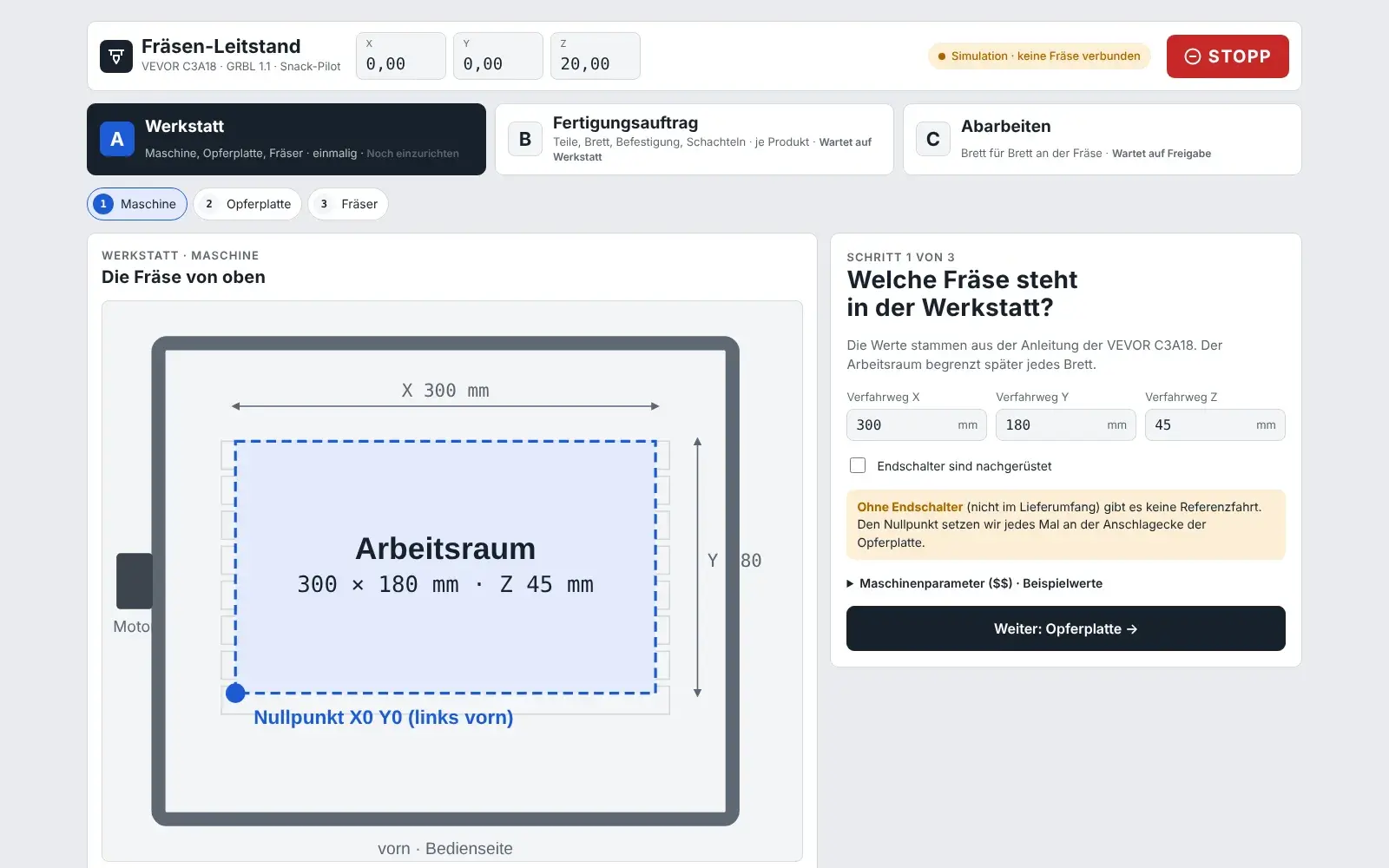
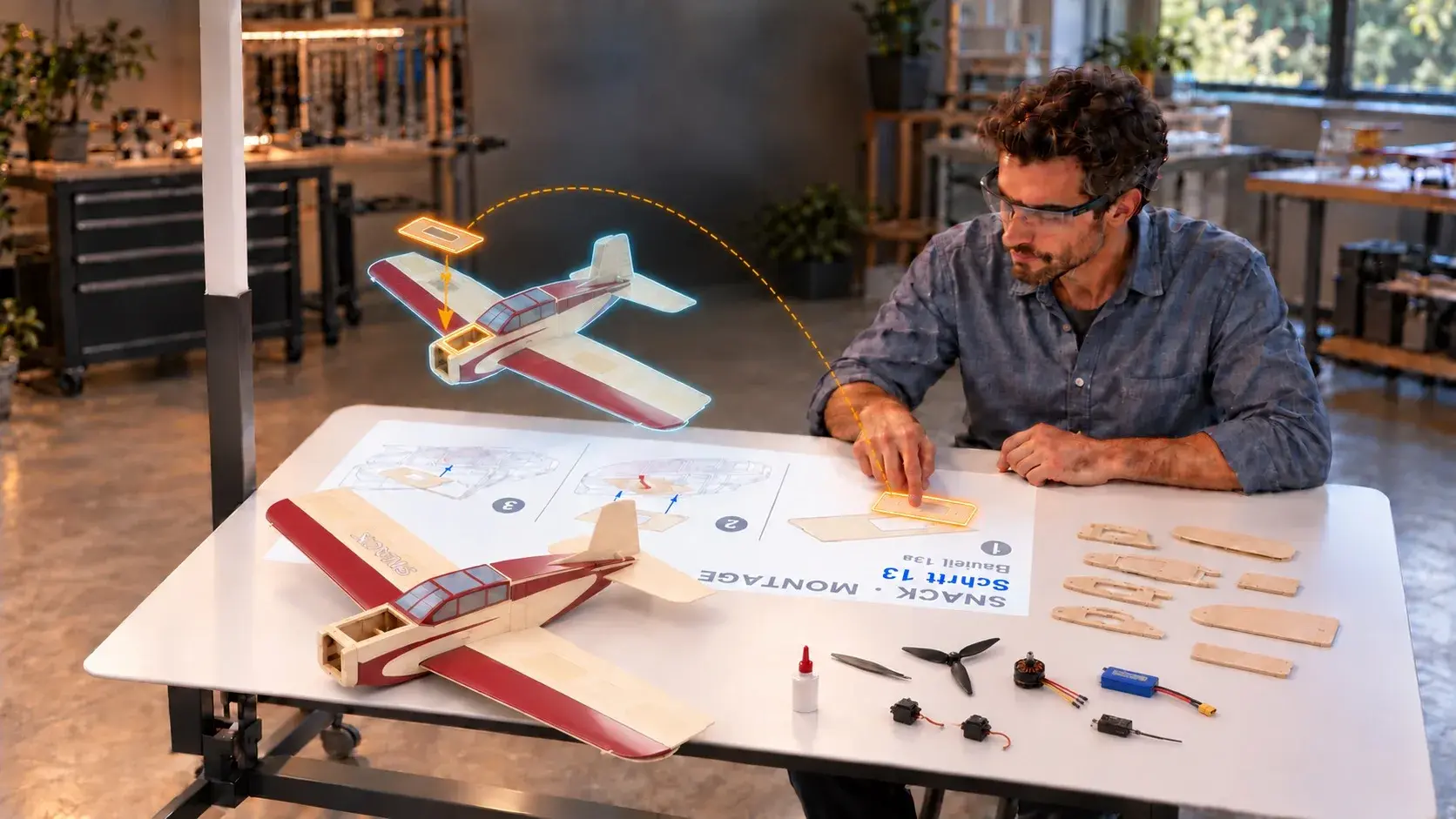
An AI switch selects the right process for each part — laser cutting, milling, drilling or 3D printing — and accounts for its particular characteristics. A guided CNC control station replaces expert knowledge with navigation, and at the Smart Table the projection shows part, position and the next assembly step.
Concept and pilot come from JSTec. Expertise doesn't disappear — it moves: what is experience in many heads today will be held, verified and repeatable, in the AI.
People Compose. AI Conducts. Robots Play.
The goal is a value chain in which people stand at the start and at the approval gates — and everything in between is planned, synchronised and checked by AI. A gate is only justified where something is irreversible, concerns safety or deviates from the order. With every clean run, a gate may be dropped.
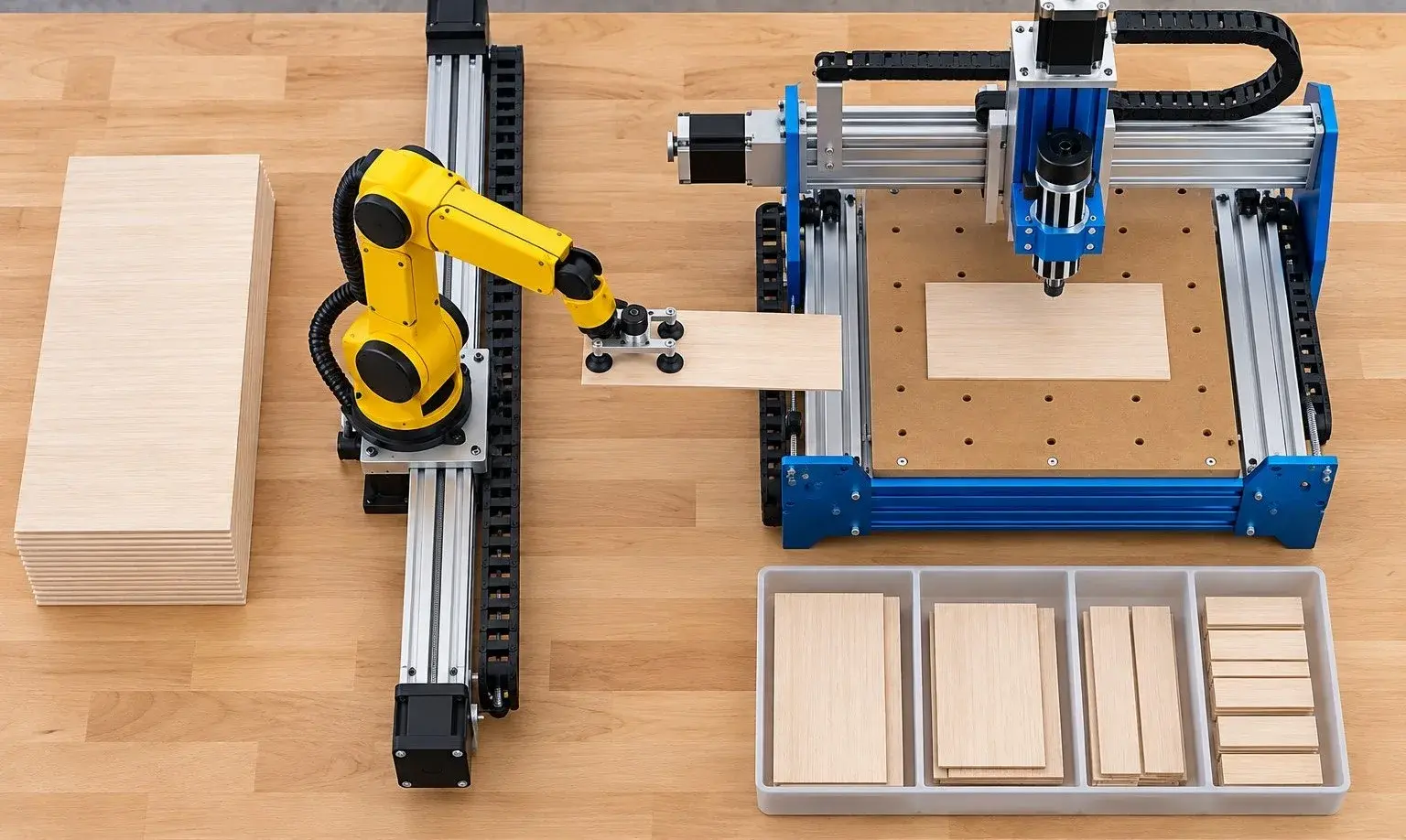
The next stage makes the chain physical: robot movements are no longer taught point by point but derived from CAD, gripper and cell, and verified in the digital twin. This makes automation economical even at batch size one — practised small with a gantry mill and desktop robot, designed for the industrial cell.
Proof in Practice: Pilot Project “Snack”
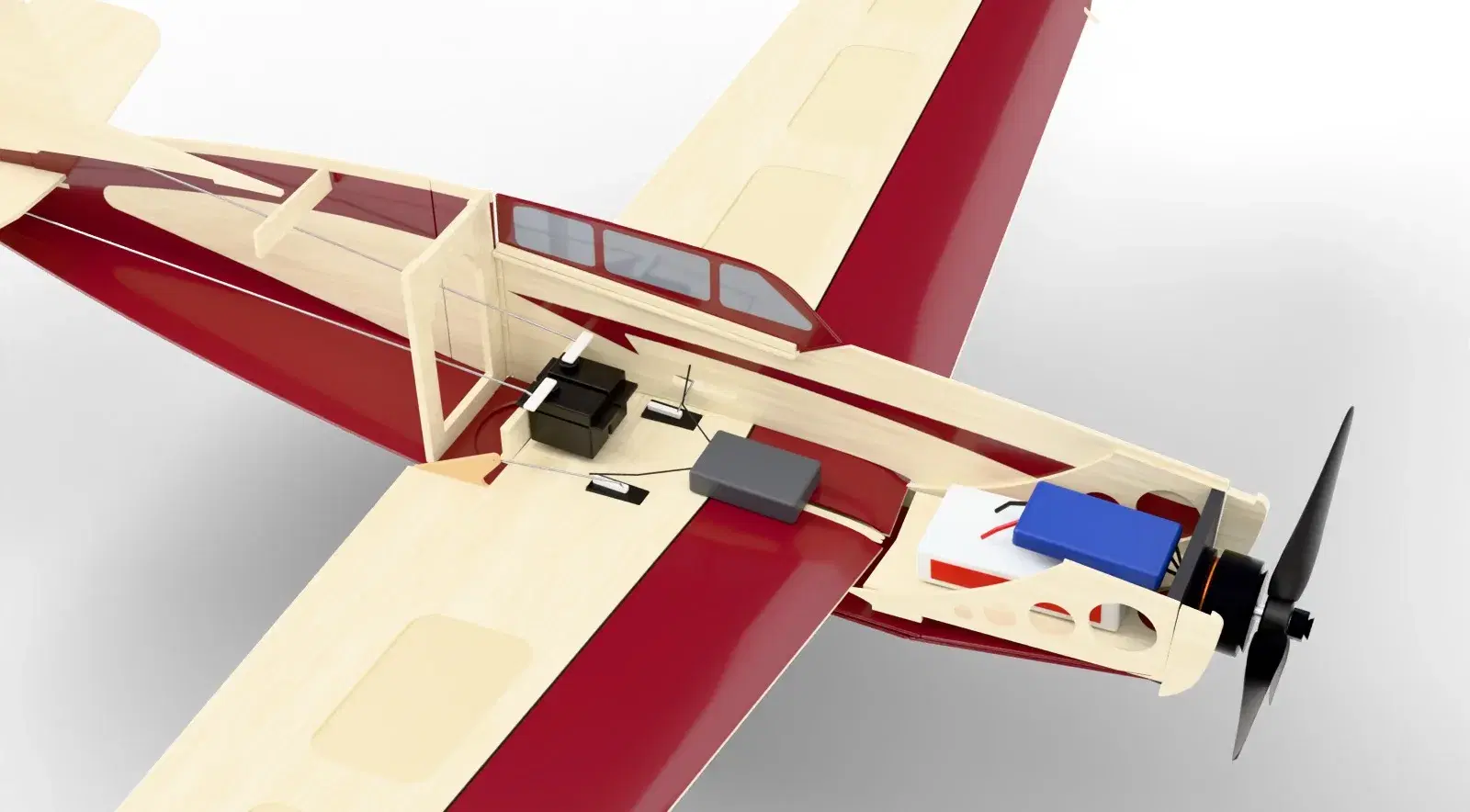
From the model aircraft's building plan, the AI automatically identified all 87 wooden parts — with no part missing when checked against the manufacturer's data. Before the first chip it found, among other things, a rubbing pushrod and a propeller reaching 29 mm below the fuselage; the motor mount moved to 3D printing. Next, a robot will load the mill on its own.